Kwon Hyunyoung Women's Clinic Doctor's Column
Obstetrics & Gynecology Column

Cervical Cytology Is Normal: Is an HPV Test Still Needed?

Why an HPV test should be taken together with cervical cytology even when the cytology result is normal, and how often screening is advised.

Published 2026-10-28 Updated 2026-10-28 Reviewed by Hyunyoung Kwon, Medical Director · Obstetrics & Gynecology Specialist

A normal cervical cytology result does not mean that the possibility of cervical cancer has disappeared completely. Cytology alone can miss some lesions, so it is safer to have an HPV test at the same time.

The national cervical cancer screening offered every 2 years to women aged 20 and over checks only for changes in the shape of the cells, whereas an HPV test looks separately for infection with the high-risk viruses that are the main cause of the cancer. This article sets out how the two tests differ and why they should be taken together.

01

Is a cervical cytology test enough on its own?

Key point
A cervical cytology test alone is not enough. Its accuracy is about 80%, so a result can come back normal even when a lesion is present, and a lesion located deep in the cervix may be missed while the cells are being collected, which is why adding an HPV test is safer.

Cervical cytology collects cells from the surface of the cervix and checks them for abnormal changes, and it helps to find cervical dysplasia, which can progress to cancer, at an early stage. Its accuracy is about 80%, however, so the report quite often reads normal even though a lesion is present.

A lesion confined to the deeper part of the cervix may not be sampled adequately during collection, and an early lesion does not immediately change the shape of the cells, so it is difficult to judge from the cytology result alone. Combining cytology with an HPV test reduces what is missed.
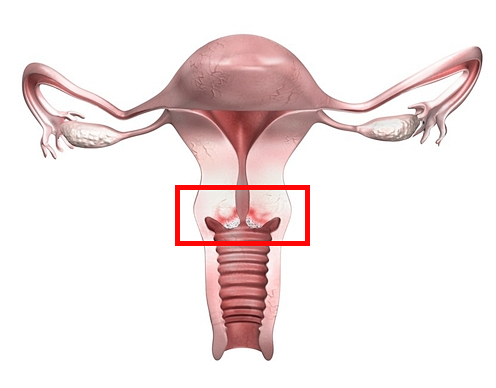
Anatomy illustration related to Cervical Cytology Is Normal: Is an HPV Test Still Needed?
02

Is an HPV test needed even without symptoms?

Key point
An HPV test is needed even without symptoms. HPV infection usually causes no noticeable symptoms, so it is sometimes found late as dysplasia within 1 to 2 years of a normal result. For that reason, screening should not be postponed simply because an earlier cytology result was normal.

In most cases HPV causes no noticeable symptoms after infection, and cases are reported in which a woman receives a normal cytology result and is then found, late, to have dysplasia within 1 to 2 years. Relying on the normal result alone means losing the chance to identify a lesion that has progressed.

For women with a family history, a previous finding of atypical cells, or bleeding or inflammation that continues, a check every 6 months to 1 year is recommended regardless of the national screening interval, and even without risk factors, having both tests together widens the options for responding.

  • Family history — with a family history of cervical cancer, a check every 6 months to 1 year is recommended
  • A finding of atypical cells — if this was seen in an earlier test, follow-up testing at shorter intervals is needed
  • Persistent bleeding or inflammation — if it continues, a check is needed regardless of the national screening interval
03

How is an HPV test different from a cytology test?

Key point
An HPV test checks for the viral infection itself rather than the shape of the cells. While a cytology test looks only for abnormalities in cell shape, the HPV test also identifies the high-risk virus types that are the main cause of cervical cancer, so the two tests answer different questions.

Cytology examines the collected cells under a microscope to see whether their shape has moved outside the normal range, so it has a limitation: during the period before the cells change shape, it cannot pick up an abnormality even if the virus is present. An HPV test detects the genetic material of the virus, so infection can be confirmed even at the stage before cell changes appear.

The HPV test is not covered by the national screening programme and is an optional test that has to be added separately, so many women have cytology alone and move on. Considering that infection with high-risk HPV is the main cause of cervical cancer, however, taking both tests together is a way of lowering the risk.

04

How should vaccination and follow-up be managed for prevention?

Key point
Prevention needs both a check of vaccination status and regular follow-up. If there is no vaccination history, guidance on vaccination is given, and it is recommended to set a follow-up interval of between 3 months and 1 year and to have more detailed tests at those visits.

If there is no vaccination history, the first step is to receive guidance on preventive vaccines such as Gardasil and decide whether to be vaccinated. Even after vaccination is complete, it cannot replace regular screening, so the habit of having both tests together should be kept.

Depending on the test results and risk factors, the timing of follow-up is set at 3 months, 6 months or 1 year, and when necessary a more detailed examination such as an HPV test or magnified imaging of the cervix is added so that a lesion can be managed promptly. This is safer than depending on a single normal result.

  • Gardasil vaccine guidance — if there is no vaccination history, the decision on vaccination is made after a consultation
  • Setting the follow — up interval — the timing is set between 3 months and 1 year according to risk factors
  • Detailed examination — when needed, an HPV test or magnified imaging of the cervix is used to check for lesions

Hyunyoung Kwon, Medical Director
Doctor's view

How the doctor decides

Hyunyoung Kwon, Medical Director · Obstetrics & Gynecology Specialist

I do not tell patients to feel reassured by a normal result alone

I do not say that no further testing is needed simply because the cytology result came back normal. I explain the limits of the test's accuracy first.

I check first for risk factors

I ask first about family history, any previous finding of atypical cells, and whether bleeding or inflammation is continuing, and I suggest a different screening interval accordingly.

I do not pass over the terms written on the report

When an unfamiliar term such as reactive cellular changes appears on the report, I do not simply move on; I explain what it means together with the plan for observation from here.

I give guidance on vaccination and follow-up together

For patients with no vaccination history, I first discuss whether to be vaccinated, and then I set the follow-up timing at between 3 months and 1 year and draw up a plan for more detailed tests.

Summary

In summary

Cervical cancer is a disease that can be prevented to a considerable extent simply by having cytology and an HPV test together. Feeling reassured by a normal cytology result can mean missing the opportunity for prevention. With a family history, a finding of atypical cells, or persistent bleeding or inflammation, a check every 6 months to 1 year is advisable.

FAQ

Frequently asked questions

QMy cervical cytology result was normal. Do I really need an HPV test as well?
A

The accuracy of cytology is about 80%, so the result can be normal even when a lesion is present. An HPV test can also confirm whether there is infection with a high-risk virus.

QHow often should an HPV test be taken?
A

Without risk factors, it can be taken together with cytology on the same cycle of every 2 years. With risk factors, the interval is brought forward to every 6 months to 1 year.

QIs screening unnecessary after the HPV vaccine?
A

The vaccine is a means of prevention, but it cannot take the place of regular screening. Screening should be taken at the set interval whether or not a woman has been vaccinated.

QShould the test be taken even with no symptoms at all?
A

HPV usually causes no noticeable symptoms. There are cases in which screening is put off on the strength of a normal result and dysplasia is found within 1 to 2 years.

Hyunyoung Kwon, Medical Director
Medical review
Hyunyoung Kwon, Medical Director · Obstetrics & Gynecology Specialist
This content is general medical information and may not apply to every individual. Diagnosis and treatment are decided through a consultation.